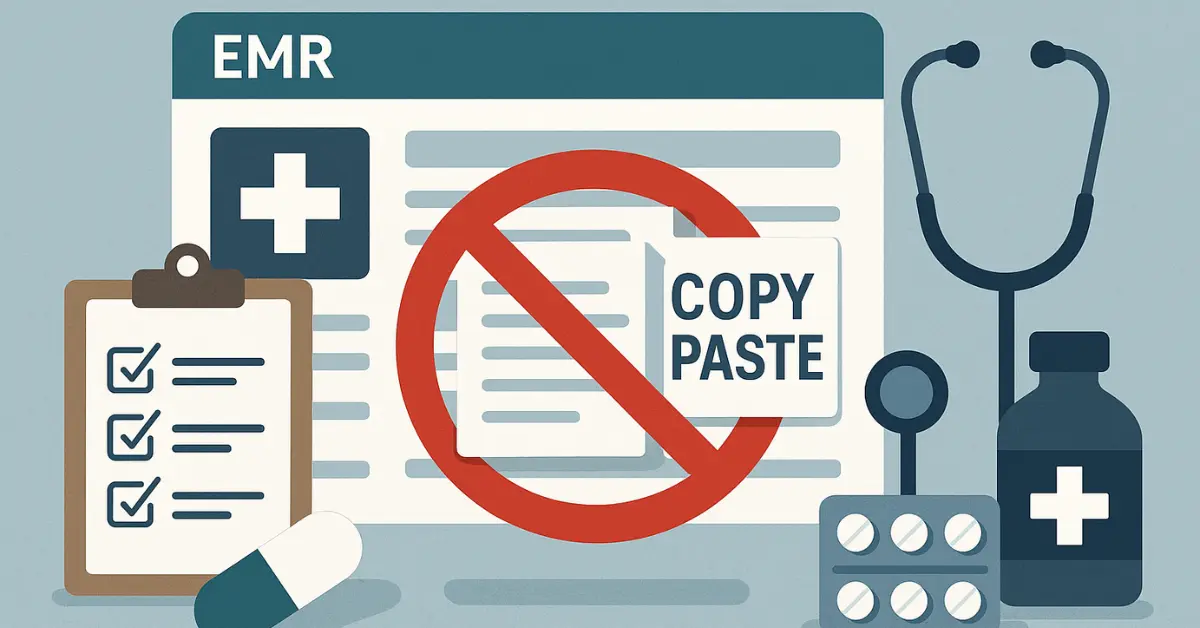
A sentence gets written once, then copied into a chart, pasted into a billing note, duplicated into a follow-up form, and carried into an insurance claim.
By the time it lands in the patient’s record, it has been touched half a dozen times.
Copy-paste was meant to save time.
Instead, it became one of healthcare’s biggest hidden liabilities.
Errors slip in unnoticed.
Records bloat with recycled text.
Staff spend hours chasing fields instead of serving patients.
In an industry where accuracy and speed define outcomes, relying on Ctrl+C and Ctrl+V is more than inefficient.
It’s dangerous.
How Copy-Paste Culture Took Over EMR Workflows
Copy-paste wasn’t always a problem. When electronic medical records first rolled out, it was the fastest way to keep up with rising documentation demands.
What started as a shortcut, though, quickly turned into the standard. Today, entire workflows rely on duplicated text to move patient data across systems.
A Shortcut That Became the Standard
In the early days of EHR adoption, clinicians and staff needed ways to speed up note-taking and data entry. Copy-paste became the easiest option.
Over time, that habit spread across clinical and administrative teams, embedding itself in daily workflows. What was once a workaround is now baked into healthcare culture.
The Risks Nobody Talks About
Duplicated data doesn’t just create inefficiency. It creates liability.
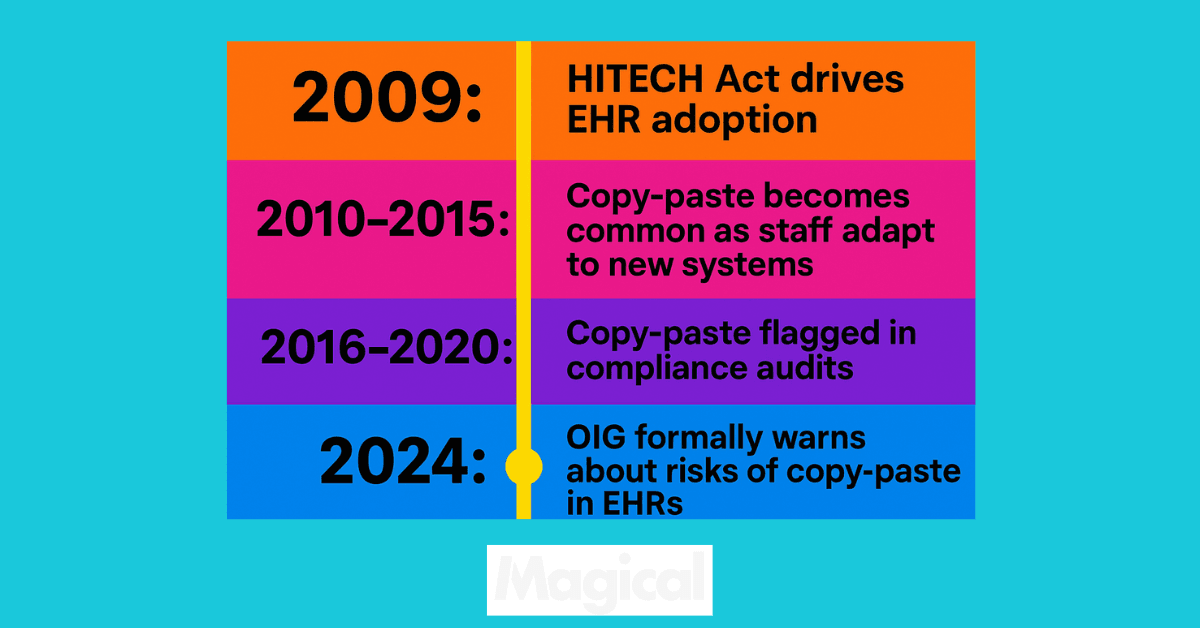
The Office of Inspector General (OIG) recently flagged copy-paste documentation as a key contributor to inaccuracies in patient records.
Similarly, research published in JAMIA found that overuse of copy-paste is linked to diagnostic errors and misleading clinical documentation.
Errors in a chart ripple outward, affecting billing accuracy, compliance, and ultimately patient safety. What feels like a quick fix in the moment becomes a long-term risk for the organization.
The Operational Costs of Copy-Paste in EMR Workflows
Copy-paste isn’t free. Every duplicate entry drags down workflows, inflates records, and increases the chance that something important gets missed.
For healthcare admin teams, the costs are both operational and human.
Data Duplication Slows Everything Down
When the same information gets entered in multiple places, every update becomes a chain reaction. A single correction requires edits across several records.
Billing slows, coding accuracy suffers, and staff spend more time managing data than managing care.
A HealthIT.gov report highlights how documentation burden, including duplication, directly impacts data quality and slows decision-making across healthcare systems.
It’s Not Just Clinical. Admin Teams Feel It Too
Copy-paste doesn’t only affect doctors and nurses. Front desk staff, schedulers, and billing teams feel the weight of duplication every day.
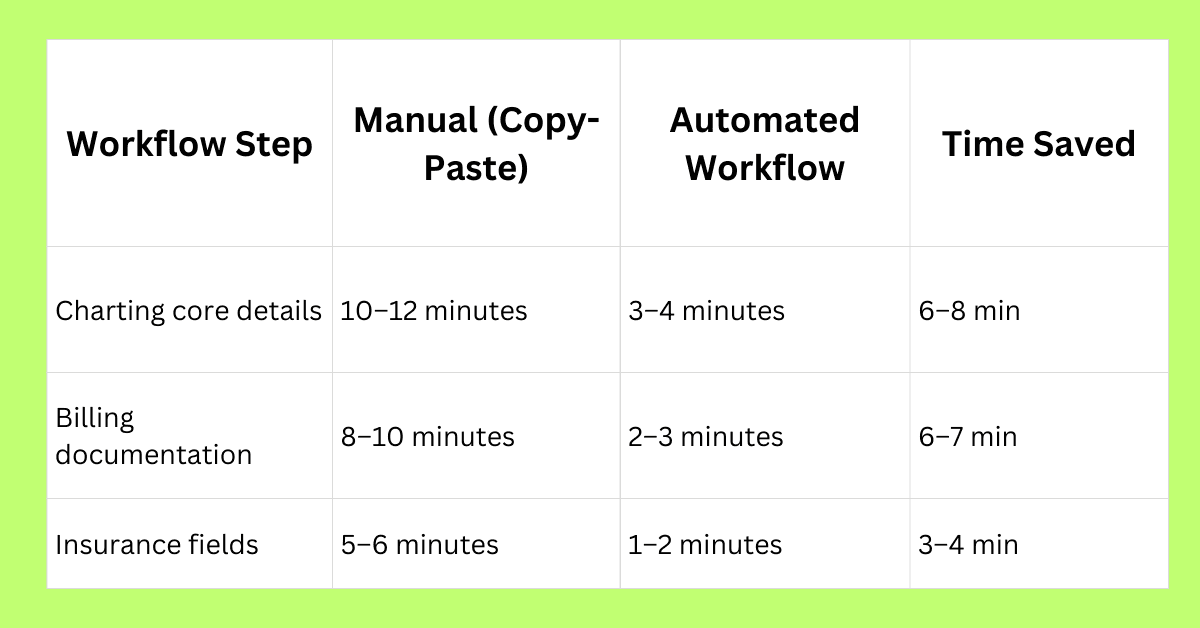
Each repeated field adds minutes to the workflow, and multiplied across dozens of patients, those minutes add up to hours of wasted time.
That was the case at ZoomCare. Before automation, their teams were retyping and duplicating data across systems, which slowed patient check-in and created inefficiencies.
By cutting out copy-paste, they gave staff time back and improved the patient experience.
Eliminating Copy-Paste Without Replacing Your EMR
Most healthcare teams can’t afford to rip out and replace their electronic medical records system. The good news is, they don’t have to.
Modern automation works on top of existing tools, eliminating duplication without disrupting core workflows.
Automation That Sits on Top of Existing Tools
Instead of relying on staff to manually bridge systems, automation fills the gaps. Patient data moves where it’s needed (EHR, billing, scheduling) without a single copy-paste.
It’s fast, accurate, and invisible to the end user.
That’s exactly how TCPA approached the problem. They didn’t swap systems. They added automation to the workflows they already had, streamlining scheduling and communication while cutting out hours of unnecessary duplication.
Real-Time Entry Without Redundancy
Automation reduces every task to a single entry point. Once information is captured, it populates instantly wherever it’s needed. No more dragging, dropping, or retyping.
For staff, that means fewer steps, fewer errors, and less fatigue.
What Eliminating Copy-Paste Means for Healthcare Teams
Removing copy-paste from EMR workflows isn’t just about efficiency. It changes the way teams work, reducing mistakes, easing stress, and creating cleaner records that support faster, safer care.
More Accurate Data, Faster Decisions
When every field is filled automatically and consistently, the quality of patient records improves. Fewer errors mean billing cycles close faster, compliance reviews are smoother, and clinical teams can trust the information they see.
At WebPT, automation eliminated copy-paste errors across thousands of clinics. Documentation moved faster, turnaround times dropped, and staff could focus on patients instead of chasing down inaccuracies.
Reduced Burnout and Admin Fatigue
Repetition is a major driver of staff burnout. The 2024 Medscape burnout report confirmed that documentation burden is one of the top reasons healthcare workers feel overwhelmed.
Cutting out copy-paste reduces that burden, giving teams energy back for meaningful interactions.
For admin staff, fewer repetitive clicks mean less frustration. For patients, it translates into smoother experiences and shorter waits.
Healthcare Workflows That Don’t Rely on Repetition
Copy-paste is so ingrained in healthcare that many teams don’t even notice when they’re doing it. The fastest way to break free is to target the fields where duplication shows up most often and let automation handle them instead.
Which Copy-Paste Tasks Should Go First?
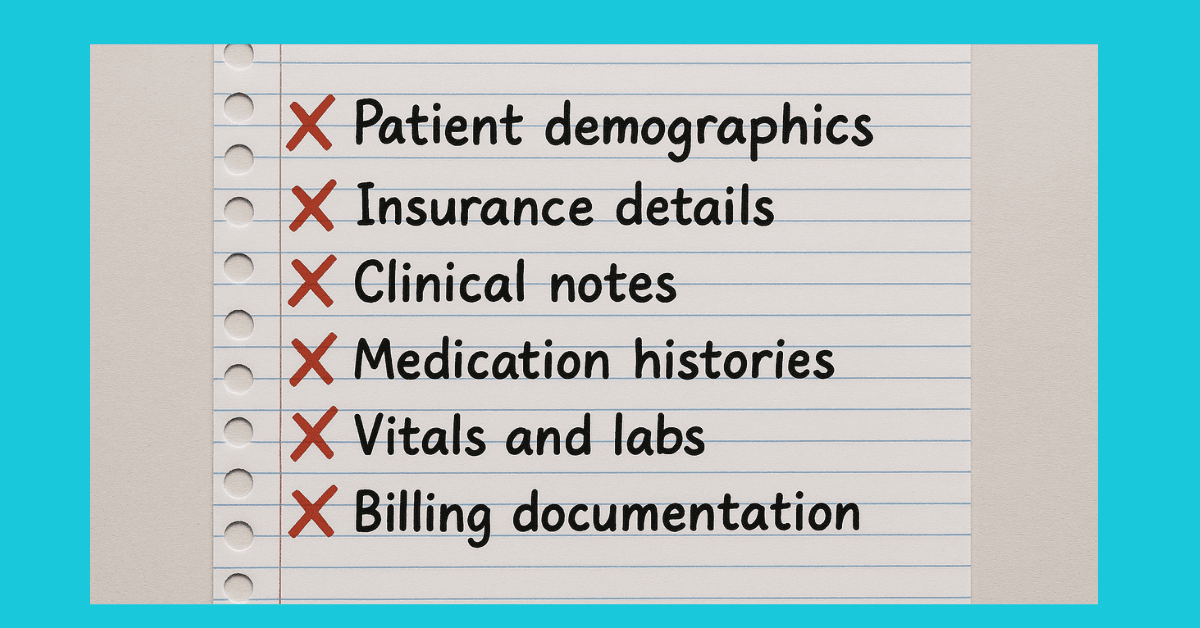
Some areas deliver faster wins than others. Here are the top offenders:
Intake notes and patient demographics
Vitals copied into multiple chart sections
Medication histories re-entered across visits
Appointment summaries pasted into EHR messages
Insurance details retyped for claims and billing
Authorization notes copied into multiple systems
By automating these high-frequency fields, clinics can reclaim hours every week and dramatically reduce error rates.
Building a Smarter Workflow with Fewer Clicks
Smart automation doesn’t replace existing systems. It sits on top of them, making fields reusable and instantly transferable across tools.
Staff still control the flow of information. They just don’t need to waste time dragging it from one place to another.
That’s what ZoomCare discovered. By eliminating redundant tasks, their teams moved faster, and patients experienced the benefits immediately at the front desk.
Top 6 EMR Fields Where Copy-Paste Happens Most
Final Thoughts: Imagine EMRs Without Ctrl+C
Picture an EMR that doesn’t depend on shortcuts.
No more hunting through records for fields to duplicate, no more clutter from recycled notes, no more fatigue from endless copy and paste.
Just accurate, real-time data that flows where it needs to go, without dragging staff down.
For healthcare teams, that shift means fewer errors, less stress, and more time to focus on patients. For patients, it means a smoother experience and faster care.
Copy-paste once felt like the only way forward. Now, it’s optional.
Download the free Magical Chrome extension or book a demo for your team today! Magical is used at 100,000+ companies and by nearly 1,000,000 users to save 7 hours a week on average.